
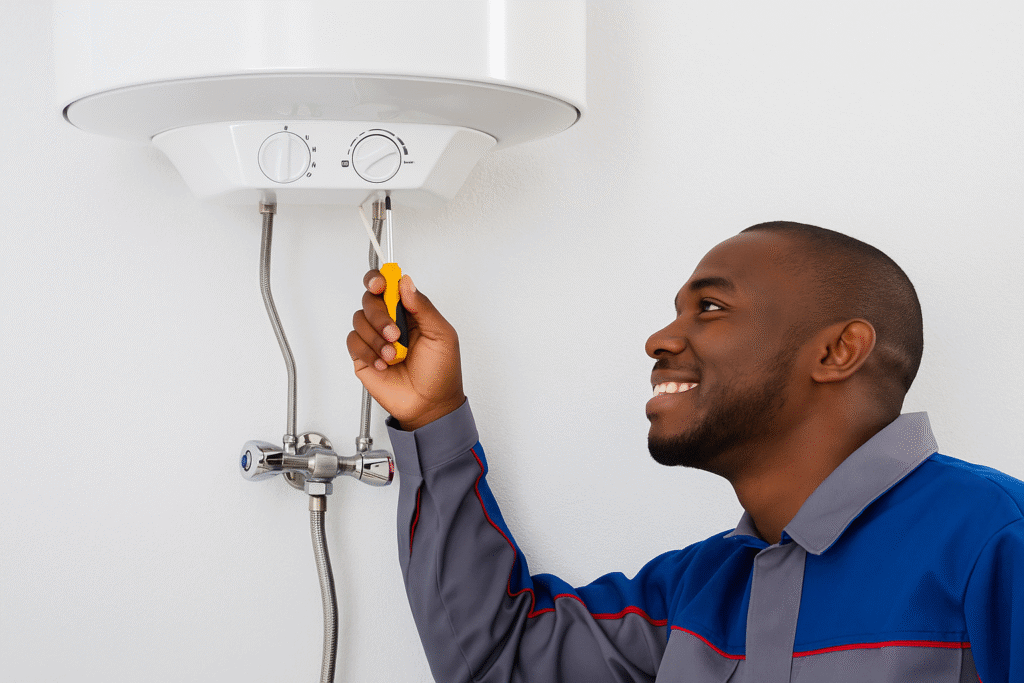
If your shower suddenly goes cold, do not ignore it. In many Porto apartments, hot water problems can come from a gas esquentador fault, an electrical issue, sediment build-up, or an old unit that is no longer working safely.
This guide explains the most common reasons your water heater is not working, what you can check safely, and when it is better to request professional water heater repair in Porto.
No hot water in your Porto apartment?
Tell us what is happening with your water heater. We’ll help you understand the next step before the problem gets worse.
1. Check If the Pilot Light Is Out
If you have a gas water heater, often called an esquentador in Portugal, the pilot light may be out.
This can happen because of gas flow interruptions, wind drafts, ventilation problems, or an older ignition system.
Before assuming the heater is broken, check:
- Is the gas supply active?
- Are other gas appliances working?
- Does the heater try to ignite?
- Do you hear clicking but no flame?
- Is there any error light or code?
You can relight the pilot only if your unit manual says it is safe to do so. Never force the system, and never keep trying if you smell gas.
If the heater still does not ignite, the problem may be the ignitor, thermocouple, gas valve, or internal safety sensor. At that point, professional water heater repair in Porto is the safer option.
2. Electrical Water Heaters: The Breaker May Have Tripped
If your water heater is electric, the issue may come from the electrical panel.
A tripped breaker can stop the heater from working, especially if the unit is old, overloaded, or affected by moisture.
What you can check safely:
- Go to your electrical panel.
- Look for a breaker that has switched off.
- Reset it once.
- Wait around 15 minutes and test the hot water again.
If the breaker trips again, stop using the heater. Repeated tripping can mean a short circuit, damaged heating element, water inside the unit, or a wiring problem.
Do not keep resetting the breaker again and again. This can increase the risk of electrical damage or fire.
3. Sediment Build-Up Inside the Tank
Porto homes can suffer from mineral build-up in water systems. Over time, sediment can collect inside tank-style water heaters.
This makes the heater work harder and can reduce performance.
Common signs include:
- Lukewarm water
- Strange popping or rumbling noises
- Hot water running out quickly
- Higher energy use
- Water taking longer to heat
Sediment build-up can damage the heating element and shorten the life of the unit.
If your heater has not been maintained for a long time, it may need flushing or inspection by a professional.
Still no hot water after basic checks?
If the pilot light, breaker, or thermostat does not solve the issue, the safest next step is to explain the problem before attempting risky repairs.
4. Thermostat Settings or Thermostat Failure
Sometimes the heater is working, but the thermostat is set incorrectly.
If the temperature is too low, the water may feel cold or lukewarm. If it is too high, it can waste energy and increase safety risks.
As a general rule, avoid extreme settings. If changing the temperature does not improve the problem, the thermostat itself may be faulty.
Signs of thermostat problems include:
- Water too cold even after adjustment
- Water suddenly too hot
- Temperature changing without explanation
- Heater turning off too early
- Heater not responding to settings
If the thermostat has failed, it may need replacement. For safety, do not open or modify the unit unless you are qualified to do so.
5. Your Water Heater May Be Too Old
If your water heater is more than 8 to 10 years old, repeated faults may be a sign that the unit is reaching the end of its life.
Older water heaters can:
- Consume more energy
- Heat water more slowly
- Break down more often
- Create higher safety risks
- Cost more to repair than replace
In many older Porto apartments, hot water problems are not just about the heater itself. Ventilation, gas connection, old pipes, water pressure, or electrical installation can also affect performance.
A professional can help you understand whether repair is still worth it or whether replacement is the smarter option.
When Not to DIY: Safety First
Some water heater problems should never be treated as a simple DIY job.
Stop and request help if you notice:
- Gas smell
- Burning smell
- Water leaking near electrical parts
- Corrosion around valves
- Buzzing or shocks
- Breaker tripping repeatedly
- Yellow or unstable gas flame
- Heater turning off by itself
If you smell gas, ventilate the area, avoid switches or flames, leave the space, and contact emergency support first.
For electrical symptoms, switch off the affected circuit if it is safe to do so and avoid touching wet surfaces near sockets or appliances.
For gas water heaters, it is important to know that in Portugal, installation, repair, alteration, or maintenance of gas appliances should be handled by DGEG-authorised gas installation entities. You can read the official DGEG guidance here: DGEG guidance on gas appliance repair.
Can I Replace the Water Heater Myself?
Some residents in Porto try to replace a water heater themselves, but this is not recommended, especially with gas units.
Incorrect installation can cause:
- Gas leaks
- Water leaks
- Fire risk
- Poor ventilation
- Carbon monoxide danger
- Insurance problems
- Future breakdowns
Even electric water heaters need correct wiring, safe grounding, pressure control, and proper installation.
If you are unsure, choose professional water heater repair in Porto instead of risking a more expensive problem later.
Need Help With Your Water Heater in Porto?
Whether it is a gas esquentador or an electric water heater, Pronto Soluções helps homeowners, landlords, tenants, and expats in Porto understand the problem and request assistance quickly.
You can also see our plumbing services in Porto for related issues like leaks, blocked drains, water pressure problems, and pipe repairs.
Need help with your water heater in Porto?
Whether it is a gas esquentador or an electric water heater, Pronto Soluções helps you send the right details and request assistance without wasting time.
see our Homepage
Final Thoughts
Hot water problems can come from small issues, like a tripped breaker or thermostat setting, but they can also point to gas, electrical, or safety faults.
If the problem repeats, the heater smells unusual, the breaker keeps tripping, or you see water near the unit, do not keep testing it yourself.
For safe water heater repair in Porto, use the Booking Lab request flow and explain what is happening before the issue becomes more serious.
